

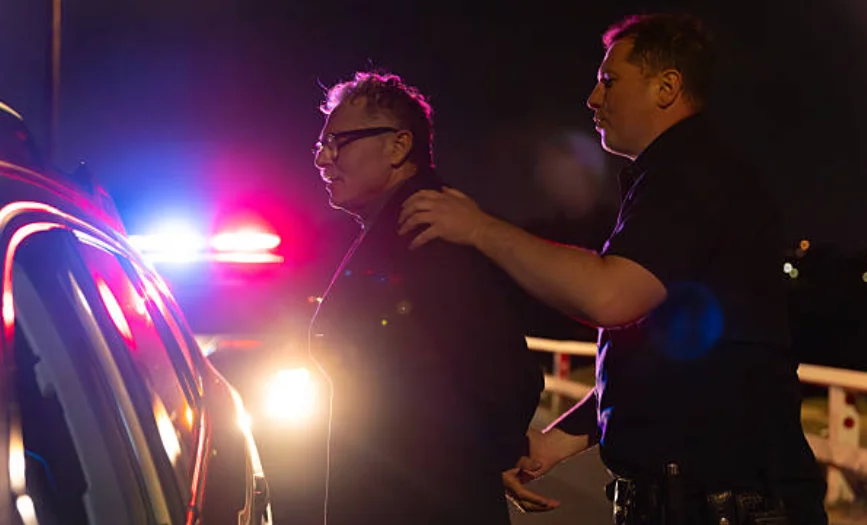
The night of your arrest probably felt like a blur, but one thing stands out clearly, the officer put you through a series of roadside exercises, then said you “failed” and put you in handcuffs. Maybe you remember trying to walk heel to toe on a rough shoulder or balance on one leg while cars roared by. Now, sitting at home in Daytona Beach or elsewhere in Volusia County, you are wondering whether that quick roadside ritual really proved anything about impairment.
Many drivers assume those field sobriety tests are official, infallible, and that the officer must have done them the right way. In reality, the tests are only reliable if they are given exactly the way the National Highway Traffic Safety Administration (NHTSA) requires. Even small deviations in how the officer instructed, demonstrated, or scored your performance can turn the results into little more than guesswork, even if the video makes you look unsteady or nervous. NHTSA has a national training manual that spells out, step by step, how officers should run each standardized field sobriety test. Attorney Flem Whited has spent more than 40 years focusing on DUI defense, and Whited Law Firm has handled only DUI cases from its Daytona Beach office since 1983. That kind of repetition, in Volusia and Brevard County courts, means your tests can be analyzed against the same technical standards the officer was supposed to follow.
Call (386) 339-0702 today to setup a consultation, or contact us online to learn more.
Why Field Sobriety Protocol Matters So Much In Daytona Beach DUI Stops
Field sobriety tests are not casual balance drills. NHTSA developed a specific set of Standardized Field Sobriety Tests, often called SFSTs, through controlled studies. Those studies only showed acceptable accuracy when the tests were given under tightly controlled conditions, with officers following the manual word for word. The idea behind “standardized” testing is simple, if everyone does it the same way, the results can be compared and trusted.
In practice, this means the tests are more like a laboratory protocol than a quick roadside check. There are specific instructions, demonstrations, distances, timing, and scoring rules for each test. NHTSA warns that if the officer changes any of those elements, the research that supports the test no longer applies. A driver’s performance then becomes a product of the officer’s technique and the environment, not just the driver’s level of impairment.
Daytona Beach sees a high volume of DUI enforcement because of tourism, nightlife, and major events that draw visitors throughout the year. Officers often work fast on busy roads, near beach bars, or around special events, handling multiple stops in a shift. That pressure creates real temptation to treat SFSTs as quick, informal exercises instead of the structured, standardized tools they were designed to be. Whited Law Firm’s exclusive DUI focus since 1983 means the team has seen how that pressure plays out again and again in local reports and videos.
What NHTSA Requires For Each Standard Field Sobriety Test
NHTSA’s manual identifies three standardized tests, Horizontal Gaze Nystagmus, Walk and Turn, and One Leg Stand. Each one has a specific purpose and a prescribed method. Horizontal Gaze Nystagmus, often called HGN, checks for involuntary jerking of the eyes as they follow a stimulus like a pen or fingertip. The officer should hold the stimulus a certain distance from your face, move it at an appropriate speed, and make several passes while looking for specific “clues” in both eyes.
The Walk and Turn test is a divided attention task that combines physical balance with listening and following directions. NHTSA requires the officer to put you into a starting position, with one foot in front of the other and arms at your sides, and to keep you there while detailed instructions are given. The officer must demonstrate how to walk nine heel to toe steps down a straight line, pivot in a particular way, and then walk nine steps back. Scoring is based on defined clues, such as stepping off the line, using arms for balance, taking the wrong number of steps, or starting too soon.
The One Leg Stand test requires you to stand with your feet together, arms at your sides, and then lift one leg about six inches off the ground while counting in a specific way until the officer tells you to stop. NHTSA’s protocol calls for a timed period and limits what counts as a “clue,” such as swaying, hopping, putting your foot down, or using your arms for balance. The officer is supposed to demonstrate the position and give clear, step by step verbal instructions before having you start the test.
These are not optional niceties. NHTSA’s own materials state that the accuracy figures officers learn in training only apply if they administer, score, and interpret the tests exactly as described in the manual. Attorney Whited has taught other DUI defense lawyers how to read and apply those manuals, and his courtroom work often involves comparing an officer’s description of the test to what actually appears on dashcam or bodycam video. This level of procedural detail is where serious DUI defense work begins.
Common Ways Daytona Beach Officers Drift From Standard Protocol
Over time, and under real world pressure, officers tend to drift away from the strict SFST script they learned in training. One common problem is rushed or incomplete instructions. An officer may give key directions while you are still stepping out of your vehicle, or may fail to keep you in the starting position before demonstrating the Walk and Turn. In some Daytona Beach stops, drivers are told to begin walking or balancing before they have clearly confirmed they understand the instructions.
Environmental conditions also play a major role in Volusia and Brevard County. Many stops happen near the beach, on uneven or sandy shoulders, in parking lots with faded or no lines, or on sloped pavement along roads like A1A. NHTSA expects officers to choose a reasonably level, dry, non slippery surface and to consider conditions like high winds or poor lighting. When officers ignore those factors and insist on standard testing anyway, the driver’s performance can reflect the environment more than their sobriety.
Other protocol drifts involve scoring and improvisation. Officers sometimes treat any wobble or small misstep as a “clue,” even if NHTSA does not count it that way. Some will add nonstandard exercises that have no scientific validation, such as asking drivers to recite the alphabet backwards or touch fingers to thumbs in a pattern. These improvised tests may look impressive in a report, but they are outside NHTSA’s standardized system and lack the research that courts often rely on to treat SFSTs as meaningful evidence.
Because Whited Law Firm handles only DUI cases, the team sees these patterns repeat across many Daytona Beach and coastal stops. Over and over, the same shortcuts appear, incomplete demonstrations, testing on sloped or rough surfaces, officers talking over the driver’s questions, or recording “clues” that do not line up with NHTSA definitions. Recognizing those patterns quickly is crucial, because they can turn what appears to be a damaging video into an example of flawed procedure.
How Protocol Errors Skew Arrest Decisions & Probable Cause
A DUI arrest is not usually based on driving behavior alone. Officers often rely heavily on field sobriety tests to decide whether they have probable cause to arrest. Probable cause means enough reliable information to reasonably believe a crime, here DUI, has been committed. When a driver has only minor lane deviations or a simple equipment violation, SFST performance can become the central piece that tips the decision toward arrest.
When protocol is not followed, SFSTs can exaggerate signs of impairment. For example, if an officer rushes through Walk and Turn instructions, a nervous driver may start too early or take the wrong number of steps simply because they did not fully understand the directions. If the officer then records several “clues” without acknowledging their own rushed instruction, the report will portray a much more impaired picture than the situation justifies.
Those inflated results feed directly into probable cause. The officer writes that the driver displayed numerous clues on multiple tests, the video shows a person trying to comply under poor conditions, and prosecutors rely on that combination to support the arrest. A knowledgeable DUI defense lawyer can challenge that by showing, test by test, how deviations from NHTSA protocol undermine the reliability of the clues the officer claims to have seen.
In Florida DUI cases, judges can consider whether field sobriety tests were properly administered when weighing probable cause and the admissibility or weight of the evidence. Attorney Whited’s decades of courtroom work include cross examining officers on their SFST training, their actual roadside procedures, and the differences between the two. Exposing protocol errors can weaken the prosecution’s leverage in plea negotiations and, in some cases, support motions that limit or exclude certain testimony about the tests.
Why Your Failed Field Sobriety Test May Not Be Legally Reliable
Many people walk away from a DUI arrest convinced they looked terrible on the roadside tests and that this alone seals their fate. They remember wobbling, stepping off an invisible line, or putting a foot down, and assume any judge or juror who sees that video will agree the case is over. That reaction is understandable, especially when the officer tells you that you failed or that you “did not do well” on the exercises.
NHTSA itself recognizes that field sobriety tests are not appropriate for everyone or for every situation. Age, weight, prior injuries, back or knee problems, inner ear issues, and other medical conditions can all affect balance and coordination, even at a zero blood alcohol level. Footwear like high heels or loose sandals, slippery or uneven surfaces, poor lighting, and heavy traffic noise can also interfere with performance. Officers are trained to ask about some of these issues and to adapt or omit tests when conditions are not suitable.
When those factors are ignored, the “failure” the officer sees may have little to do with alcohol. A middle aged driver with chronic knee pain who is instructed to walk heel to toe on a sloped, gravel shoulder in the dark will likely show several clues, regardless of whether they have been drinking. A nervous driver who speaks English as a second language may miss parts of rapid instructions and appear confused. None of that necessarily reflects impairment, yet it may be written up as decisive evidence.
Legally, the reliability of your field sobriety tests depends heavily on whether NHTSA’s standards were followed and whether your personal limitations and the environment were properly considered. Whited Law Firm approaches clients as whole people, not as a list of clues on a form. When reviewing your case, the team looks at how your medical history, footwear, and roadside conditions intersect with what NHTSA expects officers to do before deciding which tests to administer and how to interpret them.
How A DUI Defense Lawyer Dissects Field Sobriety Tests In Your Case
A serious review of your field sobriety tests starts with gathering all the available material. That typically includes the arrest report, the DUI citation, any standardized SFST worksheets the officer completed, and dashcam or bodycam video. A DUI defense lawyer also wants to know about the officer’s training, such as when they last completed an SFST course and whether they are certified as an instructor or only as a student.
Next comes a detailed comparison between the NHTSA manual and what appears in your video and paperwork. The lawyer will watch how the officer positions you, what they say, how they demonstrate each test, how long they take to run HGN passes, how they count off the timing for One Leg Stand, and whether they give all the listed instructions for Walk and Turn. Each point is checked against what NHTSA requires, and each deviation is noted.
The written report is then matched against the video. If the officer recorded numerous clues on Walk and Turn, but the video shows you took the correct number of steps and kept your arms at your sides, that inconsistency becomes a key issue. If the officer claims to have performed a complete HGN examination, but the video shows only a few quick sweeps with the pen at the wrong distance, that disconnect can be highlighted in cross examination.
Using these findings, the defense lawyer can craft specific motions and questions. They may seek to limit or exclude certain testimony, argue that probable cause was weak because the tests were not standardized, or use the protocol errors to negotiate with the prosecutor. Attorney Whited’s status as one of only three Board Certified DUI Defense lawyers in Florida and his past leadership in the National College for DUI Defense reflect years of working with this kind of technical analysis. That background supports a methodical, evidence based approach to your SFSTs rather than vague claims that the officer “did it wrong.”
Daytona Beach Patterns & Why Local Experience Matters
Daytona Beach and the surrounding areas see a unique mix of traffic and enforcement. There are late night stops near beach bars, roadside checks during events that bring in visitors, and DUI patrols along coastal routes and major arteries through Volusia and Brevard Counties. In these settings, officers often need to move quickly, fit tests into tight spaces, and manage multiple risks, from speeding traffic to pedestrians and weather.
These realities can lead to consistent patterns in how field sobriety tests are handled. For example, drivers may be tested on sloped grass next to a parking lot, on sandy edges of a beach access road, or on narrow medians. During busy event weekends, instructions can be shorter or more rushed simply because officers are handling more stops than usual. Nonstandard exercises may be added when there is not enough space for a full Walk and Turn.
Local judges and prosecutors see these cases regularly, and their reactions to SFST issues are shaped by regional practice. Some may be more receptive to arguments about environmental conditions, while others focus on clear departures from NHTSA language and timing. Knowing which protocol errors tend to carry weight in Daytona Beach and which arguments have less traction comes only from long term experience in these specific courts.
Whited Law Firm’s centrally located Daytona Beach office and decades of DUI only practice in Volusia and Brevard Counties provide that local insight. The team is familiar with how area agencies typically train and deploy officers, what kinds of SFST forms they use, and how local courts have treated similar protocol issues in past cases. That context helps shape a defense that fits your specific stop, not just a generic checklist pulled from a manual.
What To Do Now If You Took Field Sobriety Tests In Daytona Beach
If you recently went through field sobriety tests, your memory of the details is a valuable piece of evidence. As soon as you can, write down exactly what the officer said, how they demonstrated each test, where you were standing, what the ground felt like under your feet, what shoes you wore, and whether you told the officer about any medical conditions or injuries. Small details, such as whether you were asked to keep your hands at your sides or how far you had to walk, may become important later.
Gather any paperwork you received, including the DUI citation, any notices about license suspension, and copies of any rights forms or implied consent paperwork. Ask whether there is dashcam or bodycam video and, if you are unsure, bring that question to your lawyer. Video often provides the most objective record of what actually happened on the roadside and can confirm or contradict what is written in the report.
Prompt review by a DUI focused lawyer can make a real difference. There are deadlines for challenging license suspensions and for filing certain motions. More importantly, early analysis allows your lawyer to identify protocol violations while the scene is still fresh in your mind and before any recording issues arise. Whited Law Firm offers a free initial consultation, is available around the clock, and can meet in person at the Daytona Beach office or virtually, so you can get tailored advice on your schedule.
Talk With A Daytona Beach DUI Defense Lawyer About Your Field Sobriety Tests
Field sobriety tests are supposed to follow a clear protocol, but on real Daytona Beach roads, that protocol often breaks down. When that happens, the arrest decisions built on those tests may be far less solid than they appear on paper or video. A careful, informed review can uncover issues that you could not be expected to spot on your own.
If you faced field sobriety tests in Volusia or Brevard County, you do not have to guess whether they were done correctly or assume that a “failed” test ends the discussion. A focused review from a DUI only firm with decades of experience and advanced DUI defense credentials can show where the process went off track and what that could mean for your case.
To discuss your stop and have your tests evaluated, contact Whited Law Firm today.